
5 min read
Hidden deep inside the dramatic Garni Gorge, the Symphony of Stones is one of Armenia’s most extraordinary natural landmarks.
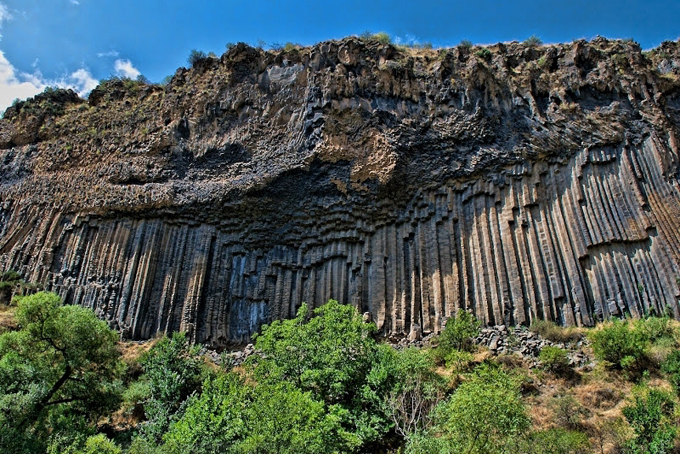
Towering basalt columns rise above the gorge in remarkably regular geometric formations, creating what looks like an enormous stone pipe organ carved into the mountainside. This unusual appearance inspired the poetic name “Symphony of Stones,” and the formation is also often called the Basalt Organ.
Located near the village of Garni in Armenia’s Kotayk Province, the Symphony of Stones is an essential stop for travelers exploring Garni Temple and Geghard Monastery.
A Masterpiece Created by Nature
The Symphony of Stones was formed through ancient volcanic processes.
As volcanic lava cooled and contracted, the rock fractured into remarkably regular columns. Today, thousands of these basalt formations cover sections of the cliffs inside Garni Gorge.
Many of the columns have distinctive hexagonal and pentagonal shapes, creating an almost perfectly organized pattern that seems surprisingly architectural for something formed entirely by nature.
Looking upward from beneath the cliffs is one of the best ways to appreciate their enormous scale.
Why Is It Called the Symphony of Stones?
The answer becomes obvious as soon as you see the formation.
Long basalt columns hang vertically along the cliffs like the pipes of a giant musical organ. Their repeating shapes and rhythmic arrangement inspired the names Symphony of Stones and Basalt Organ.
Some of the formations reach close to 50 meters in height, creating an impressive natural wall above the gorge.
The combination of stone columns, flowing water, and the acoustics of the narrow gorge gives the location an atmosphere completely different from Armenia’s historic monuments.
Explore Garni Gorge
The Symphony of Stones is located inside the beautiful Garni Gorge, below the village and famous Temple of Garni.
The gorge is known for its volcanic landscape, steep cliffs, unusual rock formations, and the river running through the valley.
Walking through the gorge gives visitors a chance to see the basalt columns from several different angles — from enormous vertical walls to sections where the ends of the columns create fascinating honeycomb-like patterns.
It is one of the best places in Armenia to combine sightseeing with a peaceful walk in nature.
A Paradise for Photography
The Symphony of Stones is one of Armenia’s most impressive photography locations.
From a low angle, the enormous basalt formations seem to stretch endlessly toward the sky. Armenia’s official tourism portal specifically recommends photographing the site from below to emphasize the scale of the columns.
Depending on the time of day, sunlight creates changing shadows across the rocks, revealing different textures and geometric patterns.
Wide-angle photographs are especially effective for capturing the dramatic height of the formations.
Walk Along the Azat River
The natural beauty of the area extends beyond the basalt columns.
A walk through Garni Gorge follows the river through a landscape of rocky cliffs and vegetation. Travelers who want a longer outdoor experience can continue along routes through the valley toward other sections of the Azat River landscape.
Spring and autumn are particularly pleasant seasons for walking in the gorge, when temperatures are comfortable and the surrounding scenery becomes especially colorful.
Combine the Symphony of Stones with Garni Temple
A visit to the Symphony of Stones is naturally combined with the nearby Temple of Garni.
Standing high above the gorge, Garni Temple represents an entirely different type of beauty.
The 1st-century classical temple offers travelers a glimpse into Armenia’s pre-Christian history, while the gorge below reveals the geological history of the landscape.
Together, the two sites provide a fascinating contrast between architecture created by people and architecture created by nature.
Continue to Geghard Monastery
After visiting Garni and the Symphony of Stones, continue toward Geghard Monastery.
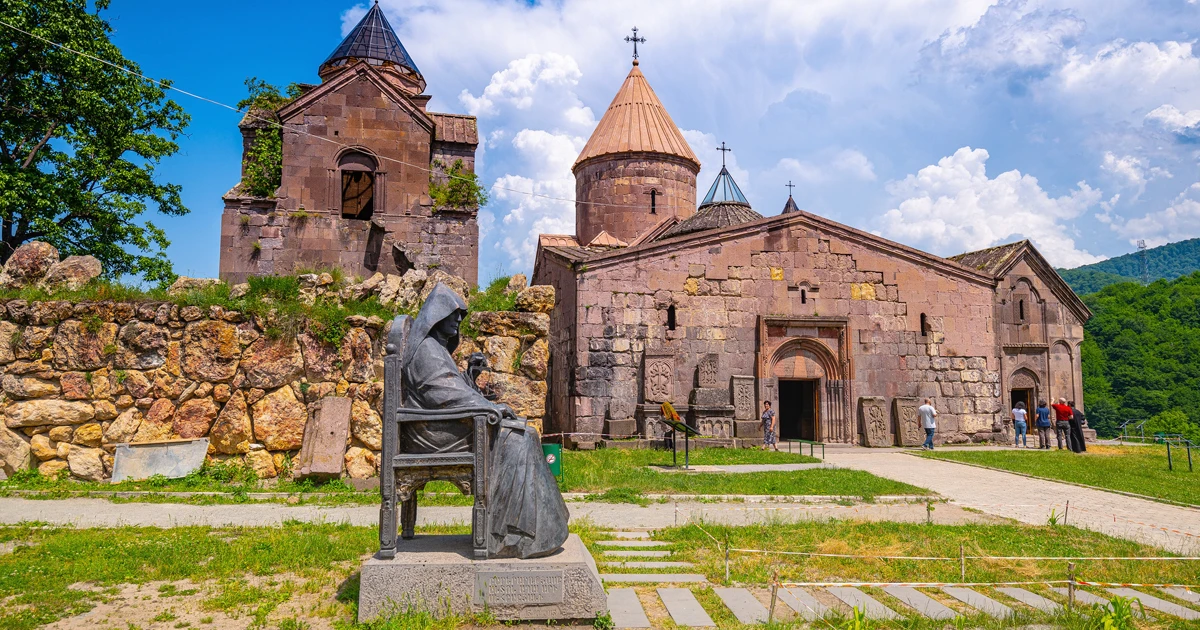
This UNESCO-listed medieval monastery is famous for its churches and chambers carved directly into the surrounding rock.
In a single day, travelers can therefore experience three very different highlights of Armenia:
Garni Temple — ancient Armenian history and classical architecture.
Symphony of Stones — spectacular volcanic geology.
Geghard Monastery — medieval Armenian Christian heritage and rock-carved architecture.
This combination makes the Garni-Geghard area one of the most rewarding day trips from Yerevan.
Best Time to Visit
The Symphony of Stones can be visited throughout much of the year, but spring and autumn are particularly enjoyable.
Spring brings greener landscapes and wildflowers to the gorge, while autumn offers comfortable temperatures and beautiful seasonal colors.
Summer is also popular, although visiting earlier in the morning can provide cooler conditions and fewer crowds.
Why Visit the Symphony of Stones?
Armenia is famous for ancient monasteries, churches, and historical monuments, but the Symphony of Stones demonstrates that some of the country’s greatest masterpieces were created entirely by nature.
Its giant geometric columns, volcanic history, dramatic canyon setting, and proximity to Garni make it one of Armenia’s most memorable natural attractions.
Whether you are interested in geology, photography, hiking, landscapes, or simply discovering unusual places, the Symphony of Stones deserves a place on your Armenia itinerary.
Discover the Symphony of Stones
Walk beneath towering basalt columns, explore the beautiful Garni Gorge, and experience one of Armenia’s most remarkable geological wonders.
Combine the Symphony of Stones, Garni Temple, and Geghard Monastery for an unforgettable journey through Armenia’s nature, ancient history, and cultural heritage.
Leave a Reply