
5 min read
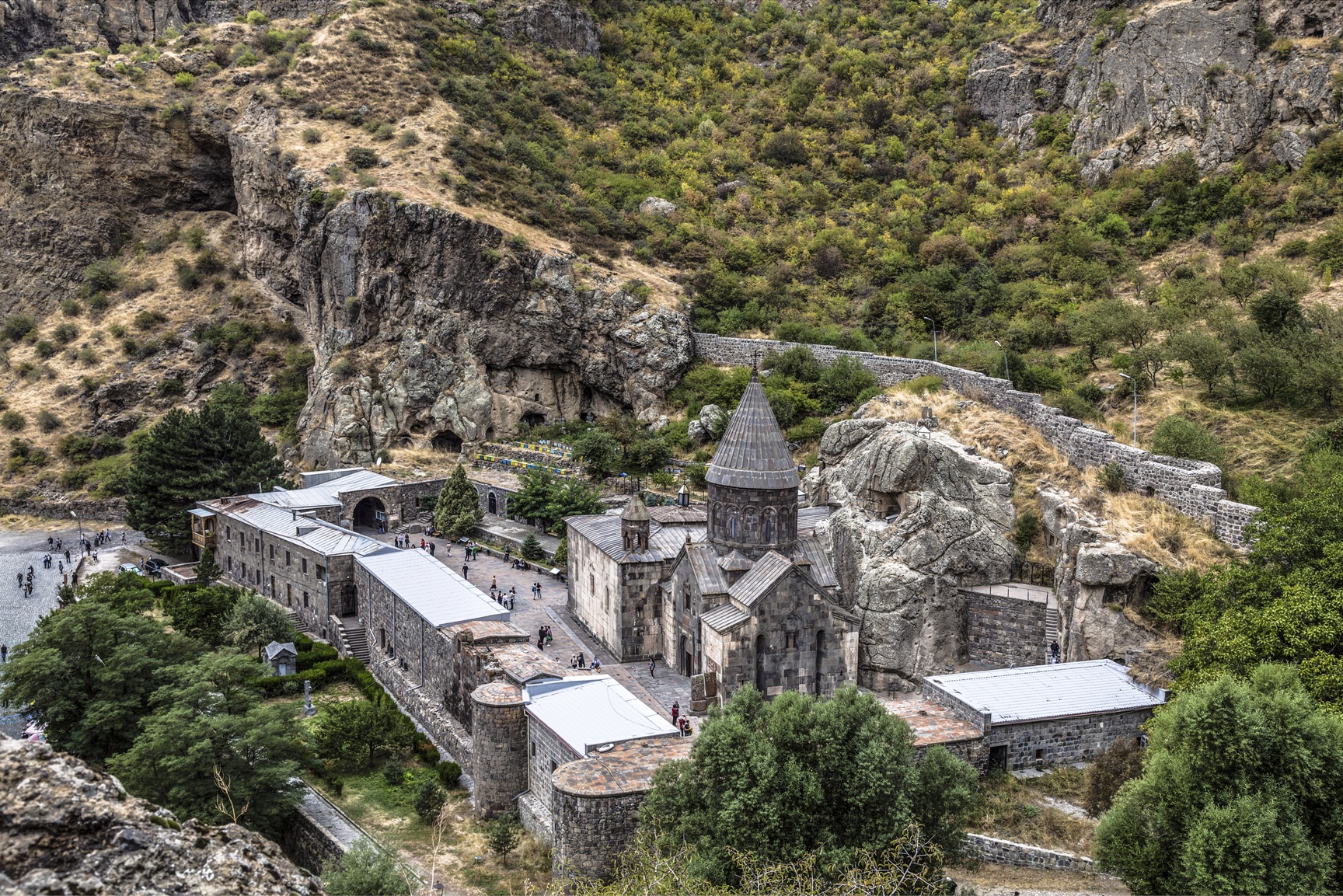
Hidden between the towering cliffs of the Upper Azat Valley, Geghard Monastery is one of Armenia’s most extraordinary historical and spiritual landmarks.
Unlike most monasteries in the country, parts of Geghard were carved directly into the surrounding rock. Ancient churches, underground chambers, khachkars, stone passageways, and dramatic mountain scenery create an atmosphere unlike anywhere else in Armenia.
Recognized as a UNESCO World Heritage Site, Geghard is an essential destination for travelers interested in Armenian history, architecture, culture, and breathtaking landscapes.
A Monastery Carved into the Mountains
Geghard’s most remarkable feature is the way its architecture becomes part of the surrounding mountain.
Several churches and tombs were cut directly into the living rock instead of being constructed entirely from separate stone blocks. UNESCO describes the monastery as an exceptionally well-preserved example of medieval Armenian monastic architecture and decorative art.
Walking through the complex, visitors move from open courtyards into mysterious rock-cut chambers where natural light enters through small openings above.
The combination of architecture, darkness, stone, and light gives Geghard its unforgettable character.
From Ayrivank to Geghard
According to tradition, the monastery was founded by St. Gregory the Illuminator after Armenia adopted Christianity in the early 4th century.
Originally, the monastery was known as Ayrivank, meaning “Monastery of the Cave,” because of its rock-cut structures.
The main architectural complex visible today was largely completed during the 13th century.
Why Is It Called Geghard?
The Armenian word “Geghard” means “spear.”
The monastery later became known as Geghardavank because, according to Armenian Christian tradition, it housed the spear believed to have pierced the side of Christ during the Crucifixion.
Tradition holds that the relic was brought to Armenia by the Apostle Thaddeus and was kept at Geghard for centuries. This connection eventually gave the monastery the name by which it is known today.
The Main Cathedral
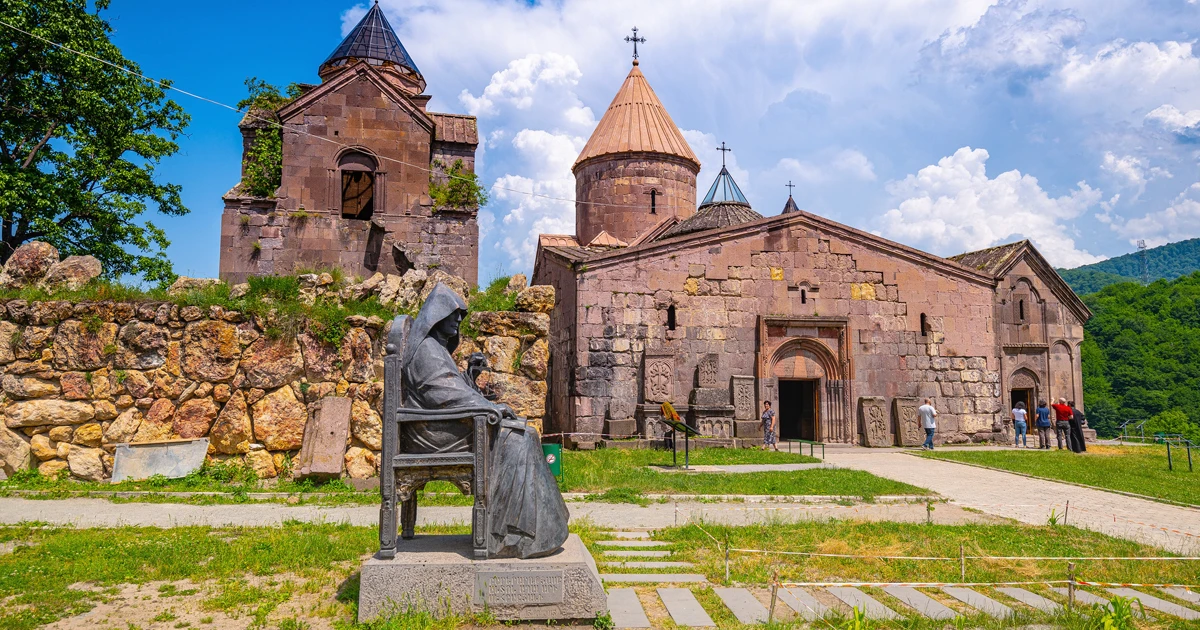
At the center of the monastery stands the Katoghike, the main church of Geghard.
Completed during the medieval development of the complex, it represents the classical traditions of Armenian church architecture, with a central dome and carefully constructed stone walls.
The church connects with a large gavit, or entrance hall, which leads visitors toward some of Geghard’s extraordinary rock-carved spaces.
Churches Carved Directly into Rock
Beyond the main cathedral, some of Geghard’s most fascinating spaces are hidden inside the mountain.
The first major rock-cut church was created before 1250, while another rock-cut church was completed in 1283. The complex also contains chambers associated with the medieval Proshyan princes, tombs, chapels, monks’ cells, and numerous khachkars carved into the surrounding rock.
It is difficult to appreciate from photographs just how unusual these interiors are.
Entire rooms, arches, columns, decorative patterns, and domed ceilings appear to emerge from the mountain itself.
Experience Geghard’s Famous Acoustics
One of the most memorable experiences at Geghard is simply listening.
The enclosed stone chambers have remarkable natural acoustics. Even a quiet voice can resonate throughout some of the rock-cut rooms, creating a powerful atmosphere.
Visitors are often fascinated by how sound travels through the chambers, adding another dimension to the monastery’s unique architecture.
Medieval Art and Khachkars
Geghard is also filled with beautiful examples of traditional Armenian stone carving.
Look closely at the walls and surrounding cliffs and you will discover khachkars — Armenian cross-stones — along with decorative reliefs, inscriptions, geometric patterns, and carved architectural details.
The monastery was not only a religious center. During the medieval period, it also supported a school, scriptorium, library, and an active community of scholars and clergy.
A UNESCO World Heritage Site
In 2000, the Monastery of Geghard and the Upper Azat Valley was inscribed on the UNESCO World Heritage List.
UNESCO highlights the monastery’s remarkable rock-cut churches and tombs, as well as the exceptional relationship between the architecture and its dramatic natural environment.
The surrounding cliffs are therefore an essential part of the Geghard experience.
The monastery does not simply stand in the landscape — it feels as though it has grown from the mountains themselves.
Combine Geghard with Garni
Geghard is perfectly suited to a day trip together with Garni Temple.
The two destinations reveal very different chapters of Armenian history.
At Garni, visitors discover Armenia’s ancient pre-Christian heritage and classical architecture.
At Geghard, they enter the world of medieval Armenian Christianity and extraordinary rock-carved architecture.
Adding the nearby Azat Gorge and Symphony of Stones creates one of the most rewarding sightseeing routes in the region.
Best Time to Visit Geghard
Geghard has a different atmosphere in every season.
Spring surrounds the monastery with fresh greenery.
Summer provides long days for combining Geghard with Garni and other nearby attractions.
Autumn brings warm colors to the surrounding mountains and valley.
Winter can transform the monastery and cliffs into a dramatic snowy landscape.
For photography, morning or late-afternoon light can beautifully highlight the textures of the monastery’s ancient stone walls.
Why Visit Geghard?
Geghard is much more than another historic monastery.
Few places demonstrate the relationship between Armenian architecture and the natural landscape so dramatically. Churches disappear into solid rock, medieval carvings cover ancient stone surfaces, and massive cliffs rise directly behind the monastery walls.
Its combination of history, spirituality, architecture, nature, and UNESCO heritage makes Geghard one of the essential places to visit in Armenia.
Discover Geghard
Step inside churches carved from solid rock, experience the remarkable atmosphere of the Upper Azat Valley, and discover one of the masterpieces of medieval Armenian architecture.
Combine Geghard Monastery and Garni Temple for an unforgettable journey through Armenia’s ancient and medieval heritage.
Leave a Reply