
5 min read
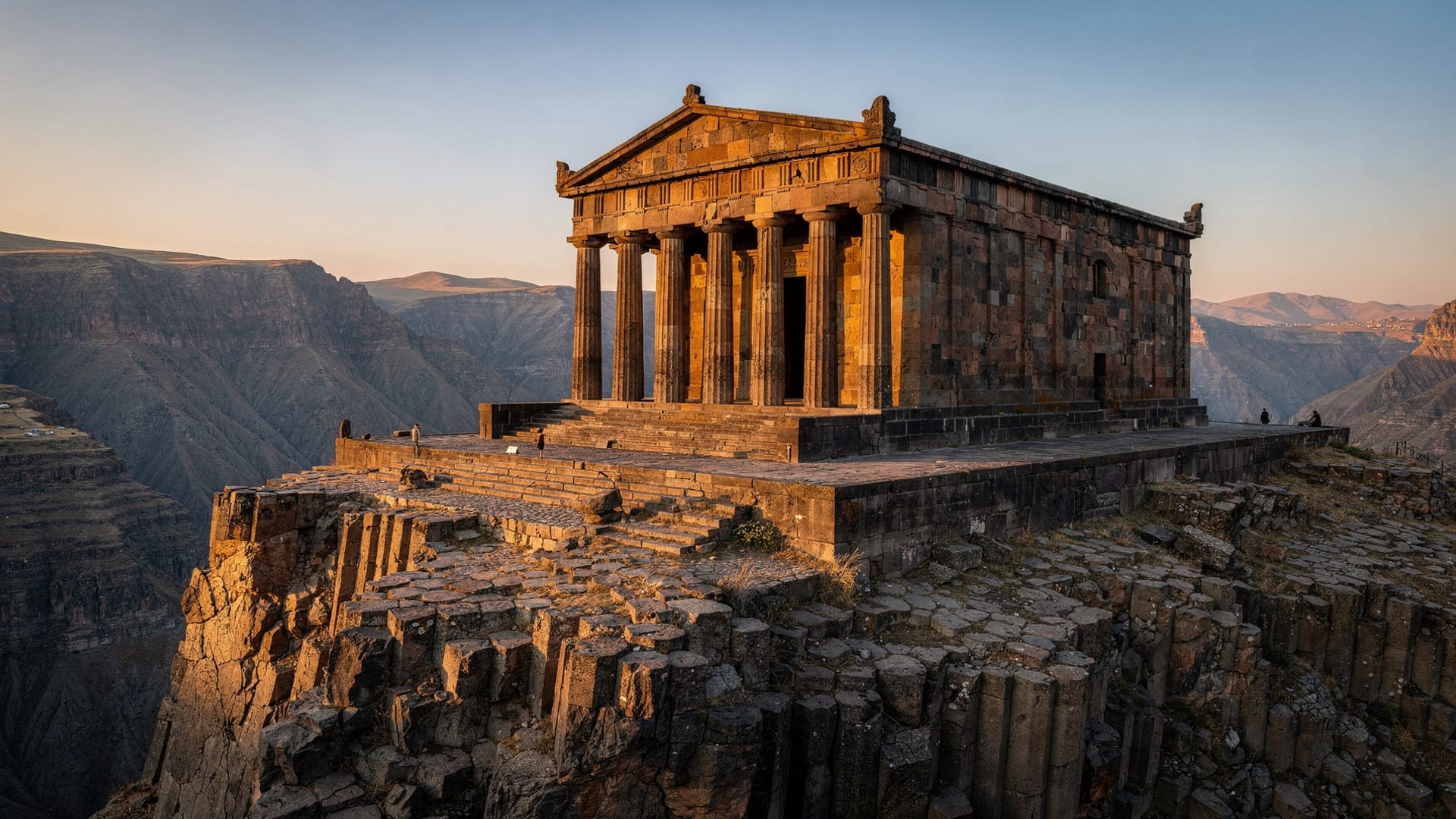
Standing dramatically above the Azat River Gorge, Garni Temple is one of Armenia’s most distinctive historical landmarks and one of the best places to discover the country’s pre-Christian past.
Located in the village of Garni, around 30 kilometers from Yerevan, the temple is surrounded by mountains, deep gorges, and spectacular volcanic landscapes. Its elegant classical columns create a striking contrast with Armenia’s medieval churches and monasteries, making Garni a truly unique destination.
Armenia’s Ancient Pagan Temple
The Temple of Garni dates back to the 1st century AD and is associated with Armenia’s Hellenistic and pre-Christian period.
The temple was most likely built during the reign of King Tiridates I and dedicated to Mihr, the Armenian god of the sun.
With its symmetrical façade, triangular pediment, tall stone steps, and elegant columns, Garni reflects the influence of classical Greco-Roman architecture while remaining closely connected to Armenian history and culture.
Today, it is the only standing Greco-Roman-style colonnaded building in Armenia and the former Soviet Union.
A Survivor of Armenia’s Christian Transformation
Armenia adopted Christianity as its state religion in the early 4th century, transforming the religious landscape of the country.
While many pagan sanctuaries disappeared, Garni survived. The site later became associated with a royal summer residence, allowing this remarkable monument of Armenia’s earlier history to remain part of the landscape.
Its survival makes Garni especially important for understanding what Armenian architecture and religious culture looked like before the spread of Christianity.
Destroyed and Rebuilt
The temple did not survive completely untouched.
A powerful earthquake in 1679 caused the structure to collapse, leaving its enormous stone blocks scattered around the site.
Centuries later, archaeological research made it possible to reconstruct the monument. Restoration work was completed in 1975, using many of the temple’s original stones.
Today, visitors can once again see the classical structure rising above the Azat Gorge much as it would have appeared in ancient times.
Explore the Ancient Garni Complex
The temple is only one part of the archaeological complex.
Visitors can also discover remnants of the ancient fortress, royal buildings, and a historic Roman-style bathhouse.
One of the most fascinating features of the bathhouse is its surviving mosaic floor, offering another glimpse into life at Garni during antiquity.
Walking through the complex also provides beautiful viewpoints over the surrounding valley and mountains.
The Spectacular Azat River Gorge
Garni’s natural setting is almost as impressive as the temple itself.
The monument stands high above the Azat River Gorge, surrounded by steep cliffs and the dramatic landscapes of the Gegham Mountains.
From viewpoints around the temple complex, visitors can admire the canyon below and understand why this strategic and beautiful location was chosen for an important royal settlement.
Discover the Symphony of Stones
A trip to Garni should also include one of Armenia’s most extraordinary natural attractions — the Symphony of Stones.
Located inside the Azat Gorge, this geological formation consists of enormous basalt columns created by ancient volcanic activity.
The long, almost perfectly shaped stone formations hang along the cliffs like the pipes of a giant musical organ, giving the site its poetic name.
The combination of Garni Temple and the Symphony of Stones makes this area especially interesting because travelers can experience both ancient Armenian history and spectacular geology during the same trip.
Experience Armenian Culture in Garni Village
Garni is also an excellent place to discover traditional Armenian village life.
Visitors can watch lavash, Armenia’s traditional flatbread, being prepared in a tonir, taste homemade cheese and fresh herbs, enjoy Armenian gata, or have lunch overlooking the surrounding mountains and valleys.
Adding a traditional meal or lavash-baking experience can turn a visit to the temple into a more complete introduction to Armenian culture.
Combine Garni with Geghard Monastery
One of the best ways to explore this region is to combine Garni with nearby Geghard Monastery.
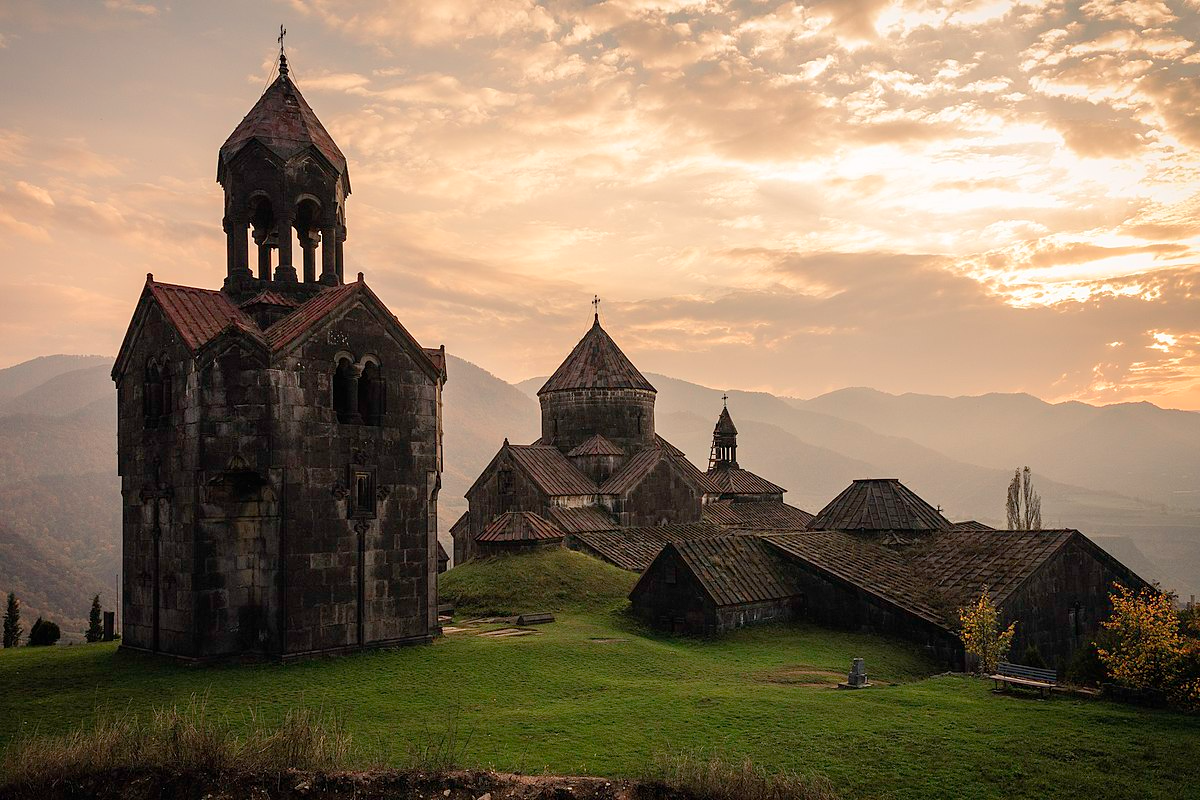
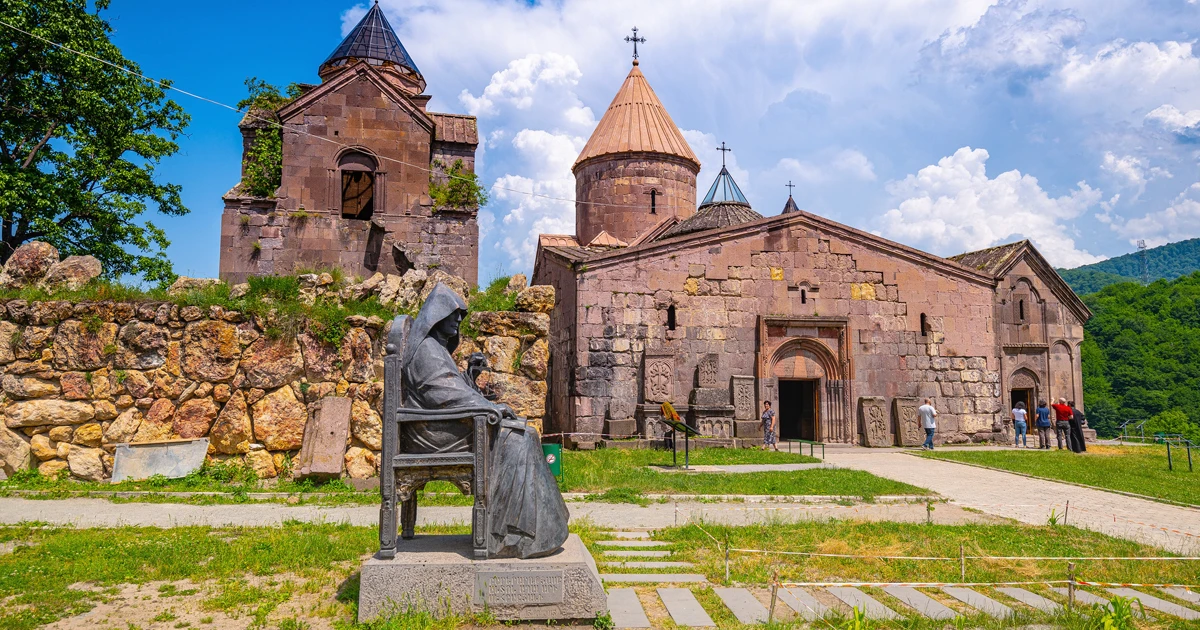
Geghard is a remarkable medieval monastery partly carved directly into the surrounding cliffs and is recognized as a UNESCO World Heritage Site.
The two destinations provide a fascinating contrast:
Garni represents Armenia’s ancient pre-Christian heritage.
Geghard represents the country’s medieval Christian architecture and spiritual traditions.
Together with the Symphony of Stones, they form one of the most popular and rewarding day trips from Yerevan.
Best Time to Visit Garni
Garni is beautiful throughout the year.
Spring brings green landscapes and comfortable temperatures.
Summer offers long sunny days and excellent conditions for exploring the gorge.
Autumn transforms the surrounding countryside with warm seasonal colors.
Winter can create an especially dramatic scene when snow covers the mountains behind the ancient temple.
Early morning and late afternoon are particularly attractive for photography, when softer sunlight highlights the temple’s stone columns.
Why Visit Garni?
Garni offers something completely different from Armenia’s famous medieval monasteries.
It allows visitors to step back into the country’s ancient pre-Christian world while enjoying spectacular mountain scenery and one of Armenia’s most unusual natural formations.
From its classical architecture and archaeological remains to the Azat Gorge and Symphony of Stones, Garni is an essential destination for anyone who wants to experience the diversity of Armenia’s history, culture, and landscapes.
Discover Garni
Stand beneath the ancient columns of Garni Temple, descend into the spectacular Azat Gorge, discover the Symphony of Stones, and experience traditional Armenian hospitality.
Add Garni to your Armenia itinerary for an unforgettable journey into the country’s ancient past.
Leave a Reply