
5 min read
On the shores of Lake Sevan, in Armenia’s beautiful Gegharkunik Province, lies one of the country’s most remarkable historical sites — Noratus Cemetery.
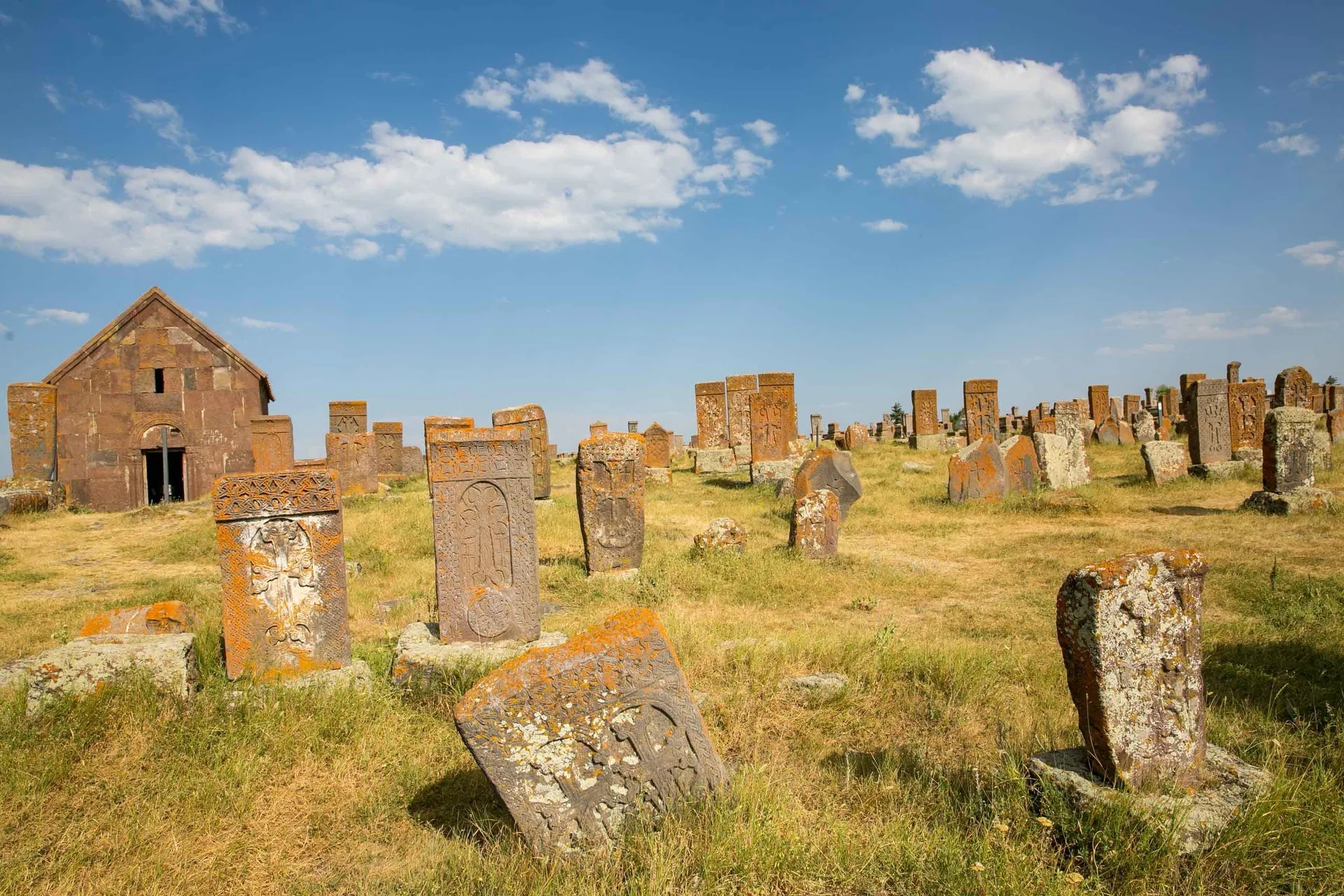
Famous for its extraordinary collection of khachkars, or Armenian cross-stones, Noratus feels like an open-air museum of medieval Armenian art. Hundreds of intricately carved stones rise from the landscape, each telling its own story through crosses, geometric patterns, plants, symbols, and centuries-old inscriptions.
For travelers interested in Armenian history, culture, photography, and traditional craftsmanship, Noratus is an unforgettable destination. Armenia’s official tourism portal describes it as the country’s largest concentration of khachkars, with around a thousand surviving cross-stones.
Armenia’s Greatest Collection of Khachkars
Noratus Cemetery is located in the village of Noratus, near the western shore of Lake Sevan.
Walking through the cemetery reveals row after row of ancient stone monuments. Many date from the medieval period, with some surviving examples dating as far back as the 9th–10th centuries.
Unlike a traditional museum, Noratus allows visitors to walk freely among the monuments and observe their carvings up close.
Some stones are simple and weathered by centuries of wind, snow, and sun. Others are covered with incredibly detailed patterns that demonstrate the extraordinary skill of Armenian stone carvers.
What Is a Khachkar?
The Armenian word khachkar means “cross-stone.”
Khachkars are carved stone monuments centered around the image of a cross and surrounded by decorative motifs. They have traditionally been created as memorials, gravestones, and monuments marking significant events or places.
Common designs include leaves, vines, grapes, pomegranates, solar symbols, and elaborate geometric patterns.
Although many khachkars follow similar artistic traditions, each individual stone is unique.
A UNESCO-Recognized Armenian Tradition
The importance of khachkars extends far beyond Noratus.
In 2010, UNESCO inscribed “Armenian cross-stones art: Symbolism and craftsmanship of Khachkars” on the Representative List of the Intangible Cultural Heritage of Humanity.
The recognition applies to the tradition and craftsmanship of Armenian khachkar carving rather than specifically to Noratus Cemetery, but Noratus remains one of the finest places in Armenia to experience this centuries-old art.
Standing among hundreds of cross-stones makes it possible to see how Armenian craftsmen transformed stone into incredibly complex works of art.
Stories Carved in Stone
Not every monument at Noratus is decorated only with crosses.
Some gravestones contain scenes representing aspects of everyday life, celebrations, occupations, or symbolic imagery.
These details give visitors a fascinating glimpse into the lives and beliefs of the people who once lived around Lake Sevan.
Look carefully as you walk through the cemetery — many of the most interesting carvings are found in small details that are easy to miss at first glance.
An Open-Air Museum Beside Lake Sevan
Noratus is surrounded by the wide landscapes of Gegharkunik Province, giving the cemetery a particularly atmospheric setting.
Ancient stones rise from grassy fields beneath enormous Armenian skies, while Lake Sevan lies nearby.
The combination of medieval history and natural scenery makes Noratus especially attractive for photography.
Early morning and late afternoon are particularly beautiful, when softer sunlight emphasizes the textures and carvings in the stone.
Legends of Noratus
Like many ancient places in Armenia, Noratus is surrounded by local stories and legends.
One well-known tradition tells how villagers once placed helmets and clothing on the khachkars from a distance, making an approaching enemy believe that a large army was waiting for them.
Whether understood as history or folklore, stories such as this have become part of the atmosphere and identity of Noratus.
Explore Every Detail
It is worth allowing enough time to wander slowly through the cemetery rather than treating Noratus as a quick photo stop.
The beauty of the site is in its details.
Look for differences in the shape of the crosses, ornamental borders, rosettes, plants, inscriptions, and patterns. Weathering has given many of the stones warm orange, gray, and reddish tones that change depending on the sunlight.
No two views through the field of khachkars are exactly the same.
Combine Noratus with Lake Sevan
Noratus is an excellent addition to a journey around Lake Sevan.
Travelers exploring the southern side of the lake can easily include the cemetery as part of a cultural day trip, combining Armenia’s spectacular high-altitude scenery with one of its most important traditions of medieval stone art. Armenia’s tourism portal recommends Noratus as one of the key cultural stops while exploring Lake Sevan.
The combination makes it possible to experience both the natural and historical character of Gegharkunik in a single journey.
Best Time to Visit Noratus
Noratus can be visited throughout the year.
Spring and early summer bring green landscapes and wildflowers around the stones.
Summer offers clear skies and long days for exploring Lake Sevan and the surrounding region.
Autumn creates warm golden colors that complement the ancient stone monuments beautifully.
Winter can be particularly atmospheric, when snow surrounds the khachkars and transforms the cemetery into a quiet, almost timeless landscape.
Why Visit Noratus?
Noratus is much more than an ancient cemetery.
It is a remarkable gallery of Armenian craftsmanship, history, symbolism, and memory preserved in stone.
Walking between hundreds of khachkars allows visitors to experience a tradition that has been part of Armenian culture for centuries.
Whether you are interested in history, art, photography, cultural heritage, or simply discovering unique places, Noratus is one of the essential stops on a journey around Lake Sevan.
Discover Noratus
Walk among centuries-old khachkars, admire the extraordinary details of Armenian stone carving, and experience one of the largest and most impressive collections of cross-stones in Armenia.
Add Noratus Cemetery to your Lake Sevan itinerary and discover a remarkable piece of Armenia’s cultural heritage.
Leave a Reply