
5 min read
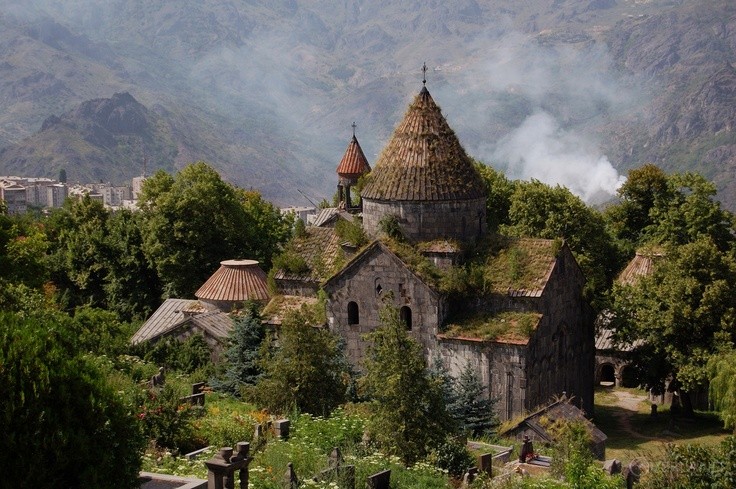
Set among the dramatic green mountains of Lori Province, Sanahin Monastery is one of Armenia’s most important medieval cultural and architectural treasures.
Dating mainly from the 10th to 13th centuries, the monastery was much more than a religious center. For centuries, Sanahin was a place of education, scholarship, manuscript production, calligraphy, and spiritual life.
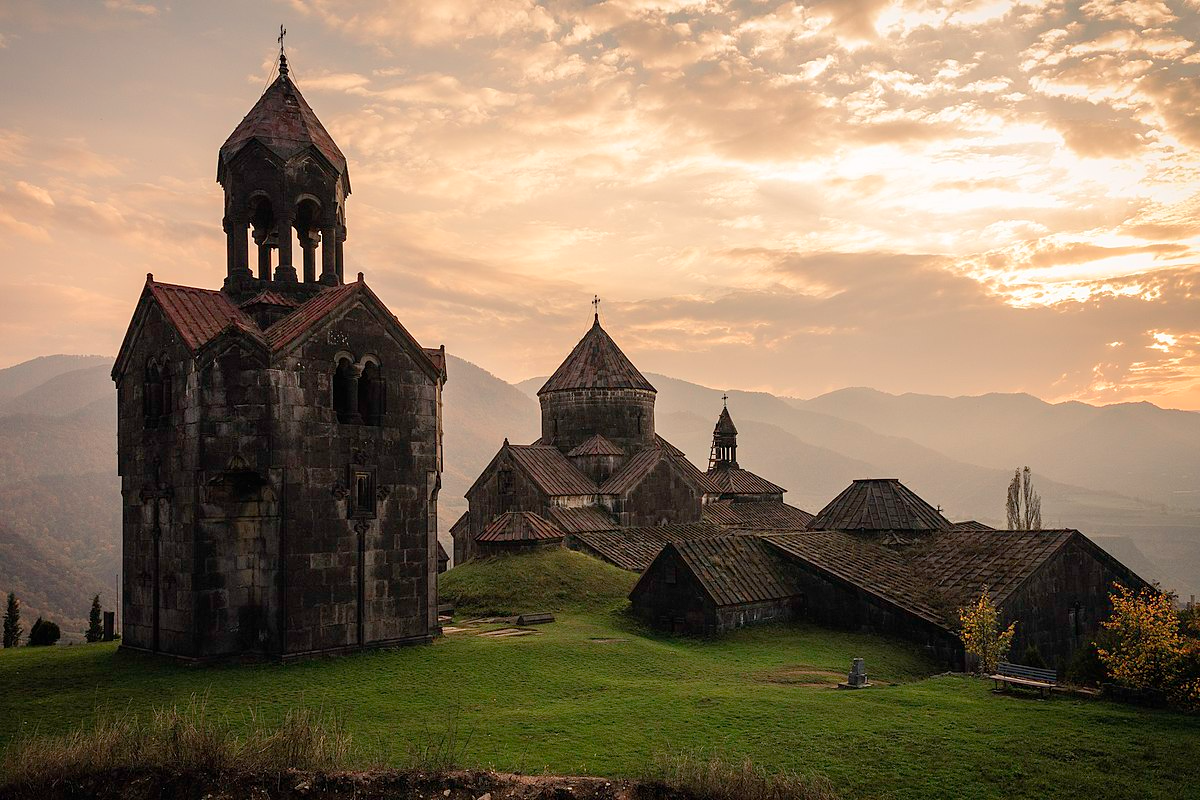
Together with nearby Haghpat Monastery, Sanahin forms a UNESCO World Heritage Site representing one of the greatest achievements of medieval Armenian religious architecture.
A Thousand Years of Armenian History
Sanahin developed into an important monastic complex during the flourishing period of medieval Armenia.
One of its oldest surviving buildings is the Church of St. Astvatsatsin — the Holy Mother of God, constructed between 928 and 944.
The larger St. Amenaprkich Church, or Church of the Holy Redeemer, was built between 957 and 966 under the patronage of Queen Khosrovanush, wife of King Ashot III the Merciful.
Over the following centuries, additional churches, halls, a library, academy, bell tower, chapels, tombs, and khachkars transformed Sanahin into a large and sophisticated medieval complex.
St. Amenaprkich Church
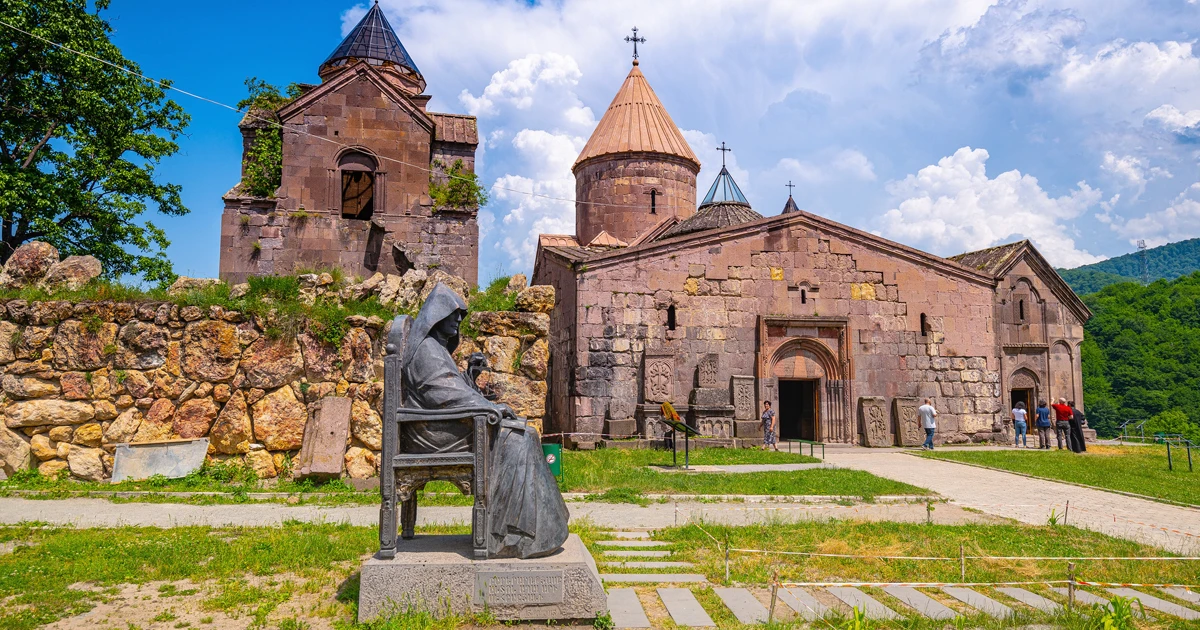
The impressive St. Amenaprkich Church is one of the architectural highlights of Sanahin.
Its powerful stone walls, central dome, and harmonious proportions represent the classical traditions of medieval Armenian church architecture.
The church became the principal building of the monastery and remains one of the finest surviving monuments within the complex.
Look carefully at the eastern façade, where medieval sculptural details reflect the craftsmanship and artistic traditions of the period.
A Famous Medieval Center of Learning
Sanahin was not simply a monastery — it was also one of medieval Armenia’s important centers of education.
UNESCO notes that Sanahin became particularly renowned for its school of illuminators and calligraphers. The monastery played an important role in preserving knowledge, producing manuscripts, and educating generations of scholars.
Subjects studied within Armenian monastic centers included philosophy, theology, rhetoric, music, and other branches of medieval scholarship.
Walking through Sanahin today, visitors can still explore spaces associated with this intellectual tradition.
Discover the Sanahin Academy
One of the most fascinating parts of the monastery is its historic academy.
The long stone hall stands between major churches of the complex and reflects Sanahin’s role as an educational center.
For travelers interested in Armenian history, this part of the monastery offers an important reminder that medieval monasteries were not only places of prayer — they also functioned as centers of learning, literature, science, and culture.
The Scriptorium and Library
Sanahin also contains a historic scriptorium, sometimes described as the monastery’s library or book depository.
Manuscripts were among medieval Armenia’s greatest cultural treasures, carefully copied and decorated by skilled scribes and artists.
The survival of such spaces gives visitors a glimpse into the scholarly life that once flourished inside the monastery walls.
Ancient Khachkars
Throughout Sanahin, visitors can discover beautifully carved khachkars — Armenian cross-stones.
More than 50 khachkars are preserved within the complex. Some are considered outstanding examples of medieval Armenian sculpture, including the famous khachkars associated with Grigor Tuteordi and Sargis.
Their surfaces are filled with delicate crosses, geometric patterns, floral ornamentation, and symbolic designs.
Take time to look closely — some of the most impressive details at Sanahin are hidden within these centuries-old carvings.
A Royal and Religious Center
Sanahin also played an important political role.
The monastery served as an administrative center and dynastic burial place of the Kyurikyan Bagratids during the 10th and 11th centuries. It was also an episcopal residence for the local church diocese.
Historic tombs preserved within the complex provide another connection with the powerful Armenian families that shaped the history of medieval Lori.
UNESCO World Heritage
Sanahin and Haghpat are recognized together as a UNESCO World Heritage Site.
UNESCO describes the two monasteries as outstanding examples of Armenian religious architecture, combining elements of Byzantine ecclesiastical architecture with the traditional building traditions of the Caucasus.
Haghpat was originally inscribed on the World Heritage List in 1996, and the property was expanded in 2000 to include Sanahin.
Today, the two monasteries form one of Armenia’s most important UNESCO cultural destinations.
Architecture in Harmony with Lori
Sanahin’s setting is an essential part of its atmosphere.
Ancient stone buildings are surrounded by the mountains and deep valleys of Lori, one of Armenia’s greenest and most dramatic regions.
During spring and summer, the surrounding landscape becomes intensely green.
Autumn transforms the hills into shades of yellow, orange, and red, while winter can cover the monastery and mountains with snow.
The combination of ancient architecture and mountain scenery makes Sanahin particularly beautiful for photography.
Visit Sanahin and Haghpat Together
Sanahin is perfectly combined with nearby Haghpat Monastery.
Although the two monasteries share UNESCO status and developed during a similar historical period, each has its own architectural details and atmosphere.
Exploring both provides a much deeper understanding of medieval Armenian architecture, scholarship, and religious life.
For travelers visiting northern Armenia, a journey through Haghpat and Sanahin is one of the essential cultural experiences in Lori.
Best Time to Visit Sanahin
Spring offers fresh green landscapes and pleasant temperatures.
Summer provides long daylight hours for exploring the monastery and surrounding Lori region.
Autumn is especially beautiful for photography as the forests and mountains change color.
Winter creates a quieter and more dramatic atmosphere, particularly when snow covers the ancient stone buildings.
Why Visit Sanahin?
Sanahin is much more than a collection of medieval churches.
It is a place where Armenian architecture, education, manuscript culture, royal history, religion, and stone carving all come together.
Walking through its dark stone halls, ancient churches, academy, library, and courtyards offers a fascinating glimpse into the intellectual and spiritual world of medieval Armenia.
Whether you are passionate about history, architecture, photography, UNESCO heritage, or mountain landscapes, Sanahin Monastery deserves a place on your Armenia itinerary.
Discover Sanahin
Explore thousand-year-old churches, discover medieval khachkars and historic learning centers, and experience the beautiful landscapes of Lori.
Combine Sanahin and Haghpat Monasteries for an unforgettable journey through the UNESCO heritage of northern Armenia.
Leave a Reply