
5 min read
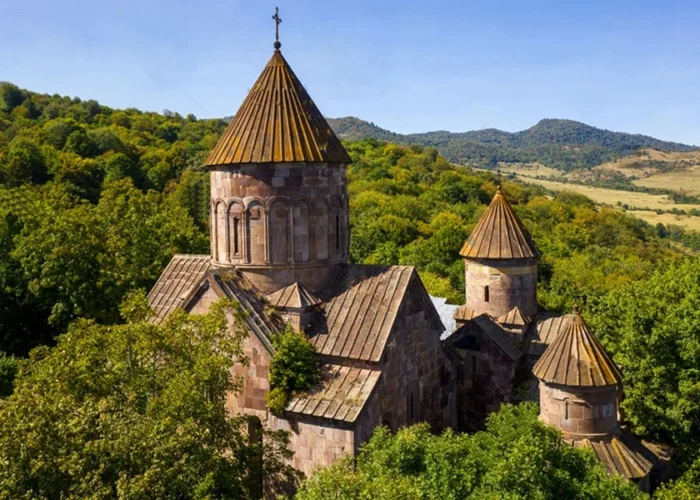
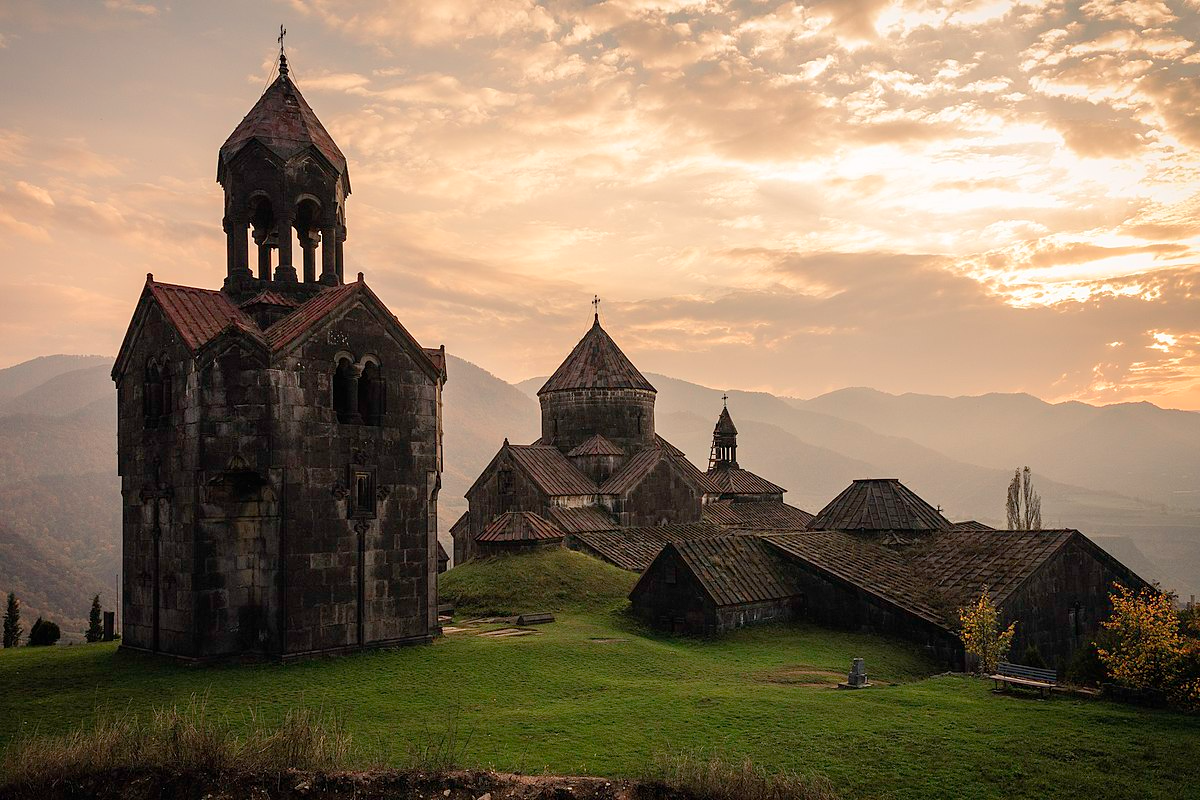
Hidden among the lush forests and mountain landscapes of Tavush Province, Makaravank Monastery is one of Armenia’s most beautiful and lesser-known medieval treasures.
Located near the village of Achajur, the monastery rises from the wooded slopes of Mount Paytapat, surrounded by the peaceful green scenery that makes northeastern Armenia so distinctive.
Unlike Armenia’s most visited monasteries, Makaravank offers a quieter experience where remarkable medieval architecture, intricate stone carving, and untouched nature come together.
A Medieval Masterpiece in Tavush
The Makaravank complex developed over several centuries, with its churches and other structures dating mainly from the 10th to 13th centuries.
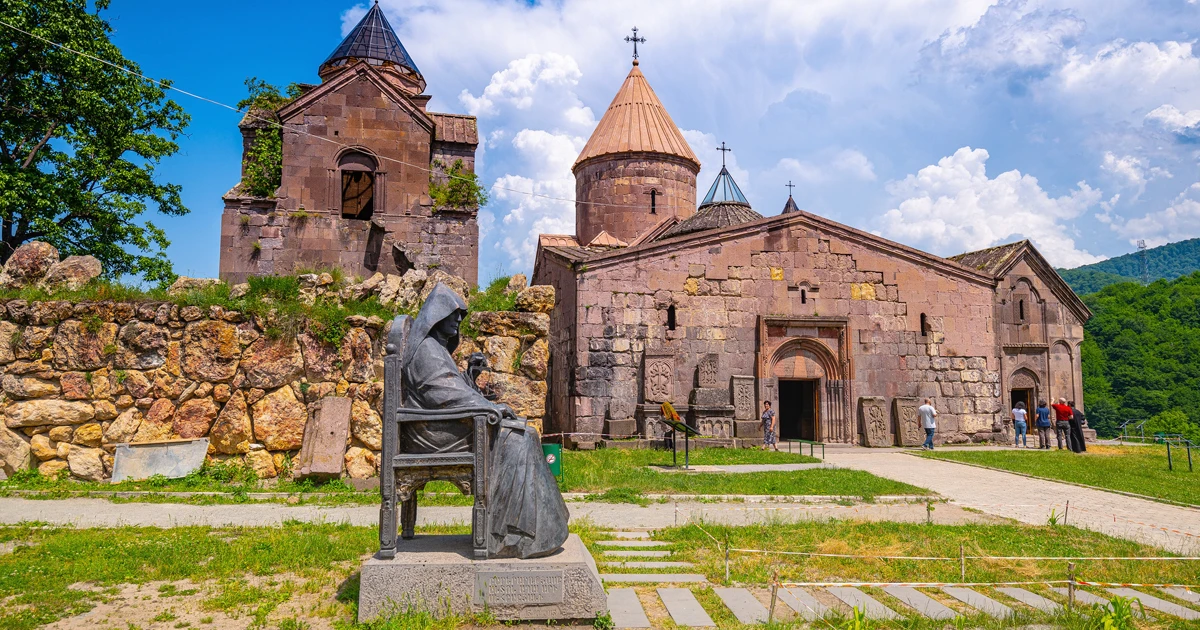
The main church was completed in 1205 and is built from beautiful pink andesite. Other buildings in the complex use red tuff and darker stone, creating subtle variations in color throughout the monastery.
Today, Makaravank is considered one of the important examples of medieval Armenian religious architecture in the Tavush region.
Extraordinary Armenian Stone Carving
What truly distinguishes Makaravank is its exceptional decorative stonework.
The monastery is filled with intricate geometric designs, floral ornaments, carved arches, decorative window frames, and symbolic figures.
Inside the main church, visitors can admire an extraordinary decorated altar platform featuring eight-pointed stars and octagonal patterns filled with detailed carvings.
Look closely and you can discover images of birds, fish, plants, mythical creatures, and human figures hidden among the elaborate designs.
These carvings demonstrate the extraordinary imagination and craftsmanship of medieval Armenian artists.
The Main Church of Makaravank
The largest and most impressive structure of the complex is the main church, built in 1205.
Its elegant dome rises above the surrounding forest, while decorative arches encircle the exterior of the drum.
The southern façade contains particularly beautiful architectural details, including a historic sundial and finely carved ornamental elements.
The warm pink and reddish tones of the stone give Makaravank a very different appearance from many of Armenia’s darker volcanic-stone monasteries.
Surb Astvatsatsin Church
Another important monument within the complex is the small Surb Astvatsatsin — Holy Mother of God — Church, constructed in 1198.
Its compact form and carefully designed details complement the larger buildings nearby.
Together, the churches, gavit, chapels, khachkars, and surviving monastery structures create a fascinating architectural ensemble.
Discover the Gavit
Like many important Armenian monasteries, Makaravank contains a gavit, or medieval entrance hall.
The gavit served both practical and religious purposes and connected some of the principal structures of the monastery.
Its stone architecture and carvings are another example of the high level of craftsmanship that makes Makaravank particularly interesting for travelers who enjoy architecture and history.
Surrounded by the Forests of Tavush
The landscape is an essential part of the Makaravank experience.
Tavush is one of Armenia’s greenest regions, with around half of the province covered by forest. Makaravank sits quietly among these wooded mountains, creating a remarkable harmony between medieval architecture and nature.
During spring and summer, the monastery is surrounded by intense green vegetation.
In autumn, the forests transform into shades of gold, orange, red, and yellow, making Makaravank especially beautiful for photography.
Mist and clouds can sometimes settle over the hills, adding an almost mysterious atmosphere to the ancient monastery.
A Peaceful Alternative to Armenia’s Famous Monasteries
One of the pleasures of visiting Makaravank is its peaceful atmosphere.
It receives fewer visitors than Armenia’s most famous religious monuments, allowing travelers to explore the architecture and surrounding landscape at a slower pace.
Walk around the churches, study the ancient carvings, discover khachkars among the stones, and simply enjoy the silence of the Tavush forests.
For travelers searching for places beyond Armenia’s most popular tourist routes, Makaravank is an excellent discovery.
Combine Makaravank with Ijevan
Makaravank can easily be included while exploring Ijevan and the wider Tavush region.
The monastery’s location near Achajur makes it an excellent cultural stop during a journey through northeastern Armenia.
A visit here combines especially well with time spent exploring Tavush’s forests, mountain scenery, local villages, and outdoor attractions.
Best Time to Visit Makaravank
Spring is perfect for fresh greenery, wildflowers, and comfortable temperatures.
Summer offers beautiful forest scenery and long daylight hours.
Autumn is perhaps the most spectacular season, when the forests surrounding the monastery turn brilliant shades of orange and gold.
Winter brings a quieter atmosphere and occasional snow, completely transforming the landscape.
Why Visit Makaravank?
Makaravank offers something particularly special: the beauty of medieval Armenian architecture without the crowds of more famous destinations.
Its elaborate carvings, warm-colored stone, ancient churches, mountain setting, and surrounding forests make it one of the hidden treasures of northern Armenia.
Whether you are interested in architecture, photography, history, nature, or discovering places away from the usual tourist routes, Makaravank Monastery is well worth adding to your Armenia itinerary.
Discover Makaravank
Travel into the green landscapes of Tavush, walk among centuries-old churches and khachkars, and discover the extraordinary craftsmanship hidden within the walls of Makaravank.
Add Makaravank Monastery to your journey through northern Armenia and experience one of the country’s most peaceful medieval landmarks.
Leave a Reply